
Lithium Economics: Chemical Grades, Battery Demand and Supply-Chain Bottlenecks
Follow lithium from deposits to qualified battery chemicals, examining benchmarks, project timing, inventory cycles, substitution and recycling.

What you will understand
Lithium demand ends in a qualified chemical, not a rock
Lithium supply connects geological deposits, extraction, concentration, chemical conversion and battery manufacturing. A tonne of mined material is not a tonne of battery-ready lithium, and abundant geological resources do not guarantee immediate supply of a usable chemical. Manufacturers need products with specific composition and consistent quality, delivered on a commercial schedule. This creates several potential bottlenecks between a resource announcement and a finished cell. Demand also extends beyond batteries, although battery applications are central to the market's industrial narrative. A useful analysis names the material being discussed before describing a surplus or shortage. Is the constraint ore, concentrate, lithium carbonate, lithium hydroxide, cathode material or qualified battery capacity? This guide follows those distinctions and their economic consequences without recommending a mineral investment, producer share or derivatives position.
Different deposits create different operating constraints
Lithium can be obtained from hard-rock deposits and brines, with other resources and extraction technologies also under development. Hard-rock operations involve mining and concentration before chemical processing. Brine operations require separation and purification suited to the particular fluid chemistry; conventional evaporation and direct extraction approaches are not identical processes. Water, reagents, energy, infrastructure and environmental management influence the economics of each project. A technology that works at one site is not automatically transferable at the same cost to another brine composition or geological setting. Compare demonstrated recovery, operating consistency and commercial scale rather than relying only on a laboratory result. Resource size is one input, but permitting, infrastructure, financing and processing performance determine how much saleable material can actually reach customers and when. A resource estimate should never be treated as a near-term shipment forecast.
Conversion and qualification are independent hurdles
Chemical conversion turns intermediate material into products such as lithium carbonate or lithium hydroxide. Purification, crystallization and impurity control can be commercially demanding even after a mine operates successfully. Battery-grade material requires more than a broad purity label: customers may impose detailed specifications and consistency requirements. Qualification links a supplier's product to a manufacturing process and can take time. Nameplate refining capacity therefore differs from sustained output that customers have accepted. A new plant may report commissioning or first production before achieving stable yields and saleable quality. Read announcements for the precise milestone and compare actual shipments with designed capacity. When raw material is plentiful but qualified chemical supply is constrained, prices and margins can diverge across stages. Integration can help coordination, but it does not eliminate chemistry, operating or customer-approval risks.
Units and chemical forms must be reconciled
Lithium statistics may refer to contained lithium, lithium carbonate equivalent, concentrate mass or a specified chemical product. These are different bases of measurement. A production figure cannot be compared with demand until the conversion basis and product scope are clear. Moisture, concentration, purity and recovery assumptions can further alter the relationship between input tonnes and saleable output. In a purely hypothetical processing example, 100 units of contained material entering a stage with 80 percent recovery yield 80 units in the recovered stream before subsequent losses. Raising recovery to 90 percent yields 90, a 12.5 percent increase over 80, without increasing the original input. This illustrates process sensitivity, not an industry recovery benchmark. Avoid adding capacities reported on incompatible bases or assuming a chemical conversion factor measures the operational yield of a real plant.
A lithium benchmark describes a particular product and place
There is no single quotation that perfectly represents every lithium transaction. Carbonate and hydroxide differ, and specifications, location, delivery terms and contract timing influence prices. Some derivatives settle against an assessed chemical price rather than delivering mined lithium. For example, the LME's lithium hydroxide contract references a defined battery-grade hydroxide assessment and regional delivery basis; its contract documentation must be read before treating it as a hedge for another material. A concentrate producer can retain substantial basis risk if its realized price does not move in line with that reference. Long-term offtake agreements may use formulas, floors, ceilings or periodic resets rather than the current spot quote. Compare like with like, and separate a published assessment from an executable offer for a particular volume. A price chart without its specification can mislead more than it informs.
Supply responds on several clocks
Exploration, project development, construction, commissioning and customer qualification proceed on different timelines. Expanding an established operation can differ substantially from developing a new deposit with new infrastructure. High prices may encourage investment, but new output can arrive after demand growth has slowed or competing projects have expanded. Low prices can postpone projects and reduce future flexibility even when current inventories appear comfortable. This creates a distinction between a near-term surplus and a longer-term supply challenge. Announced projects are not equivalent to financed and operating capacity. Assess milestones, funding, construction progress and demonstrated production rather than summing every proposed facility. Scenario forecasts are conditional on technology, demand and project execution. They should not be presented as certain shortages merely because a model shows a gap under one set of assumptions.
Inventory changes can amplify end-demand shifts
Lithium can sit as raw material, chemical inventory, cathode material, cells or finished products. These stocks are not equally visible or interchangeable. A battery manufacturer reducing chemical purchases may be consuming inventory rather than cutting final battery production by the same amount. Conversely, restocking can make chemical demand appear stronger than underlying vehicle or storage demand. Track the chain rather than using one downstream sales series as a complete explanation for upstream prices. Working-capital conditions also influence purchasing: buyers may shorten coverage when prices are falling or accumulate material when supply appears uncertain. Such behavior can magnify cyclical moves. Estimates of inventory require careful boundaries and dates, because adding stocks at different stages without accounting for conversion can double-count material. A narrative of surplus needs both a quantity and an explanation of where it resides.
Battery chemistry changes intensity, not every constraint at once
Different lithium-ion chemistries use different combinations of cathode materials, but a move away from nickel or cobalt does not necessarily remove lithium. Lithium iron phosphate and nickel-containing cathodes illustrate why the mineral consequences of a technology shift must be identified element by element. Alternative systems such as sodium-ion can change demand in applications where their performance and economics fit, but substitution depends on energy density, durability, temperature performance, manufacturing capability and customer qualification. A promising chemistry is not immediately interchangeable in every vehicle or storage design. Battery size and efficiency also influence material demand per application. Evaluate adoption scenarios with explicit assumptions about chemistry shares, unit volumes and material intensity. The correct question is not whether technology will eliminate a mineral, but where, when and to what extent a feasible alternative changes requirements.
Recycling needs feedstock, recovery and commercial outlets
Recycling can return valuable battery materials to production, but collection, safe handling, sorting and processing are separate steps. Manufacturing scrap differs from end-of-life batteries in availability and composition. A growing installed battery fleet does not immediately create an equivalent waste stream because batteries remain in service for years and may be reused. Shredded black mass is an intermediate mixture, not automatically a qualified lithium chemical. Further recovery and purification are required, and economics depend on chemistry, metal prices, process yields and costs. Lower-value material can challenge a recycler even when the environmental case remains important. Distinguish announced recycling capacity from material actually collected and converted into accepted products. Secondary supply can improve resilience, but it does not remove the need to understand primary supply while the stock of batteries in use is still expanding.
Connect product specification to a testable market thesis
Start with the chemical form, unit, geography and delivery basis. Map extraction, conversion and qualification separately, then compare demonstrated output with announced capacity. Decompose demand into application volumes, battery sizes and chemistry assumptions rather than relying on a single growth headline. Examine inventory behavior across stages and the terms of offtake contracts. For recycling, ask what feedstock is available and whether recovered material meets customer requirements. Use transparent hypothetical sensitivities to show how recovery, input costs or purchasing cycles affect results. USGS, IEA, exchange documentation and technical public agencies answer complementary questions, not one identical question. A defensible conclusion identifies the constrained stage, the timeframe and the evidence that would overturn the view. This is more useful than treating lithium as either permanently scarce or permanently abundant regardless of price and technology.
Test a scenario. Explore the market.
Hypothetical inputs for learning. Change the assumptions to see the arithmetic; these are not current market values or forecasts.
Same period for both inputs. Before taxes and fees. Formula: (1 + return) ÷ (1 + inflation) − 1. Methodology ↗
Input limits: returns, inflation and currency changes −99% to 1,000%; duration 0–30; yield changes −200 to 200 basis points.
Open an interactive market chart
Market context, not a direct measure of every subject in this article. Provider data may be delayed or unavailable. Check the instrument, quote currency and timestamp.
Open the full market workspace →Sources & further reading
Primary institutional sources underpin this educational guide. Follow the links for the original definitions, methods and research. Hypothetical examples in the text are explanatory, not current quotes or forecasts.
- USGS: Lithium Statistics ↗
- USGS: Lithium Mineral Commodity Summary 2026 ↗
- IEA: Lithium Outlook ↗
- IEA: Reliable Supply of Minerals ↗
- IEA: Global Supply Chains of EV Batteries ↗
- LME: Lithium Hydroxide Contract Specification ↗
- US Department of Energy: Batteries for Electric Vehicles ↗
- US EPA: Lithium-Ion Battery Recycling ↗
- IEA: Battery Circularity ↗
- IEA: Electric Vehicle Batteries ↗
Explore the data and markets
Continue your research
All guides →
Oil refining: crack spreads, product markets and the cost of turning crude into fuel
How crude quality, product yields, operating costs and inventories shape refining economics, with a worked 3-2-1 example.
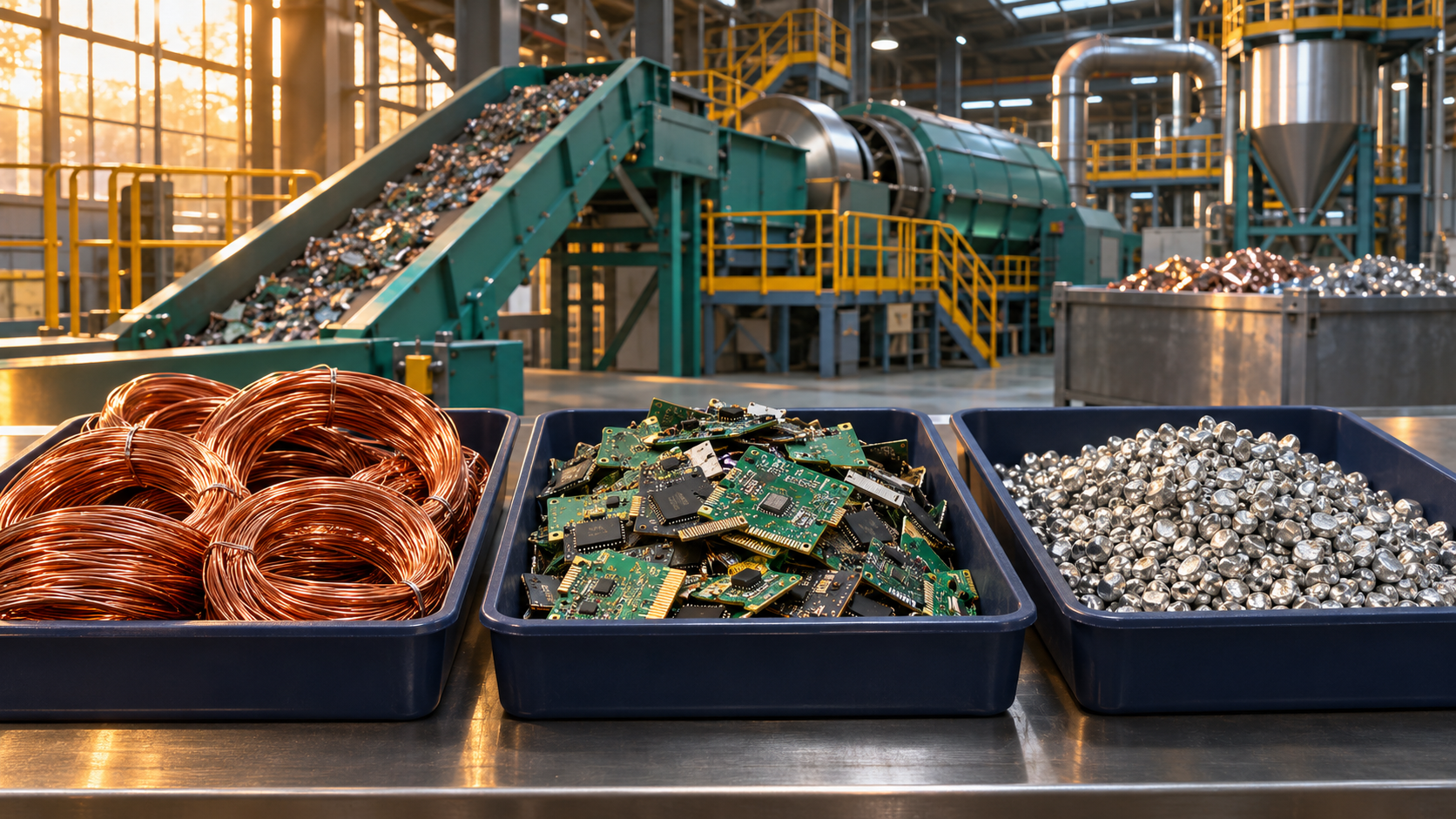
Critical minerals recycling: collection, recovery and the economics of circular supply
Why installed metal is not immediately available scrap, and how collection, quality, recovery and commercial terms determine secondary supply.

Uranium Markets: Fuel-Cycle Services, Contracts and Security of Supply
Separate uranium material from civilian fuel-cycle services, then examine procurement schedules, inventory coverage and the economics of supply delays.