
Germany commits €500,000 to WTO trade capacity: why implementation skills matter
The November 9 contribution to the WTO Global Trust Fund supports technical assistance. Its significance lies in helping economies use trade rules, not in directly financing shipments.
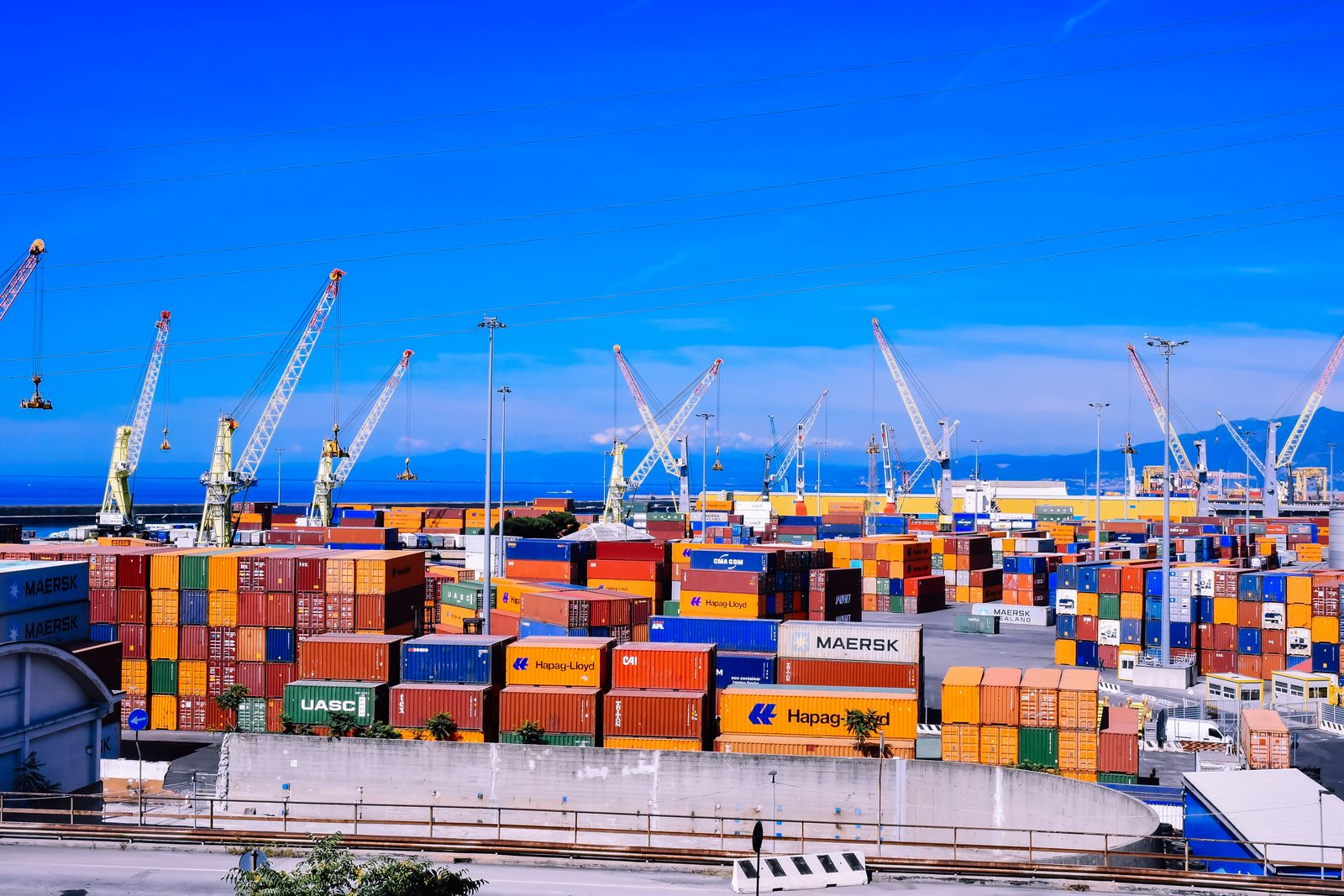
The funding announcement
Germany is contributing €500,000 to the World Trade Organization’s Global Trust Fund, the WTO announced on November 9. The memorandum was signed in Geneva by Germany’s ambassador to the organisation, Carmen Heidecke. The stated purpose is to strengthen developing and least-developed economies’ ability to participate in the multilateral trading system through technical assistance. This is a capacity-building contribution, not a new tariff agreement, an export-credit facility or a direct payment to trading firms. Those distinctions set the scale of the news correctly. The announcement confirms a funding commitment and its intended channel; it does not establish a resulting increase in exports. The economic analysis below explains how better institutional capability can matter and where the limits of that mechanism lie.
Rules are useful only when institutions can use them
Trade agreements create rights and obligations, but officials need the knowledge and administrative systems to apply them. A ministry may have to prepare a notification, assess another member’s proposal or explain a domestic measure accurately. Weak capacity can make participation reactive: a government learns about a problem only after businesses have already encountered it. Our interpretation is that technical assistance is valuable when it improves this decision process before a dispute or delay becomes expensive. The benefit is not necessarily visible as a single shipment or transaction. It may instead appear as a more predictable rule, a better-supported negotiating position or a problem resolved earlier. These are institutional outcomes that should be evaluated on their own terms before making broader growth claims.
What the assistance framework is designed to do
The WTO’s technical-assistance framework focuses on helping members understand and implement agreements, exercise their rights and participate in negotiations. Its training approach includes national and regional needs and different levels of expertise. For an economy with a small trade-policy team, continuity matters as much as the number of events attended. Knowledge can disappear when an official changes roles unless the institution records procedures and trains colleagues. A programme should therefore be assessed partly by what remains after the course: usable reference material, clear responsibilities and the ability to answer real policy questions. This is an analytical standard for evaluating assistance, not a claim that any particular recipient already meets it or that the new contribution has yet produced those improvements.
Technical assistance is not the whole Aid for Trade agenda
The WTO describes Aid for Trade as a wider effort to address trade-related constraints, including infrastructure and productive capacity. Technical knowledge is one component of that system, not a substitute for reliable power, ports, connectivity or finance. A country can understand an agreement perfectly and still face high transport costs. Conversely, a new facility may disappoint if paperwork and coordination remain weak. The relevant economic relationship is complementarity: improvements in one area can raise the value of improvements elsewhere. Our hypothetical example is a border post with good equipment but unclear procedures. Additional equipment alone may do little until responsibilities and information flows improve. The German contribution should therefore be understood within a broader development architecture rather than credited with resolving every obstacle to trade.
Why predictable border processes affect business costs
Trade facilitation concerns the movement and clearance of goods and the cooperation of relevant authorities. From a business perspective, uncertainty can be expensive even when the average administrative charge is modest. An importer facing an unpredictable release date may hold more stock, choose costlier transport or lose a production slot. A hypothetical reduction in the variability of clearance time could therefore help planning without changing the tariff itself. This is an economic mechanism, not an estimated effect of the November pledge. Measuring it would require consistent before-and-after data and attention to other changes. The institutional lesson is that accurate information and coordination can have commercial value, but a training certificate is not proof that the border process has actually improved.
Standards require expertise, not automatic deregulation
WTO rules on technical barriers and sanitary measures recognise legitimate objectives such as safety while addressing unnecessary obstacles and discriminatory treatment. Better trade capacity should not be confused with removing all regulation. It can instead help a government explain the purpose of a measure, assess evidence and communicate requirements clearly. For firms, this can reduce the risk of discovering a requirement after goods are already dispatched. Our analytical distinction is between a necessary safeguard and an avoidable administrative burden. The two may look similar in a cost spreadsheet but require different policy responses. Training is most useful when it helps officials make that distinction carefully, preserving public objectives while improving predictability for businesses that are willing and able to comply.
The difference between access and actual competitiveness
A market-access commitment establishes conditions under which goods may enter a market. It does not guarantee that a producer can supply the desired quantity, quality and price. This matters when interpreting development programmes: improved representation in trade institutions is valuable, but export performance also depends on firms’ capabilities. A hypothetical agricultural exporter may know the applicable rules yet lack storage or a reliable buyer network. Another may have competitive production but struggle to document compliance. Their constraints differ, so a uniform intervention will not produce a uniform result. CyEconomy’s interpretation is that assistance should be tied to a diagnosed bottleneck. That makes it easier to understand what success would look like and avoids attributing every subsequent export change to the training programme.
Small budgets can matter without producing instant headlines
The contribution is small relative to global trade flows, but comparing the two numbers directly would miss the intervention’s purpose. Institutional capacity is an enabling input rather than a purchase of exports. A modest improvement in the quality of a recurring decision could matter across many future cases, although that possibility is not a measured return. Equally, an underused training programme can absorb funds without changing practice. The useful evaluation question is therefore about additionality: what capability would not exist without the support? It should also ask whether domestic institutions retain that capability and fund its ongoing use. This approach avoids both exaggerating the donation’s macroeconomic impact and dismissing it merely because its headline amount is small.
A credible results framework
Attendance counts and completed courses are useful administrative measures, but they should be connected to applied outcomes. A credible evaluation could examine whether notifications become more timely, whether officials can answer technical questions independently and whether documented procedures survive staff turnover. Where business costs are the target, the relevant data may include predictability, error rates or the time required to resolve a problem. World Bank logistics indicators illustrate that performance has multiple dimensions; one overall score cannot diagnose every constraint. Our proposed framework is to connect each activity to a specific operational change and then test whether that change persists. It should disclose limitations and avoid treating a favourable national trade trend as automatic proof of programme effectiveness.
What follows the November commitment
The next developments to monitor are implementation plans, the activities financed and evidence that participating institutions can apply what they learn. The WTO’s official announcement is the source for the amount, date and purpose of Germany’s contribution. The broader WTO and World Bank materials explain relevant frameworks; they do not provide an impact assessment of this new pledge. CyEconomy’s conclusion is that the story belongs to the less visible infrastructure of trade: the people and systems that make rules usable. Its value should be judged through practical institutional improvements over time. No immediate effect on currencies, equities, shipping volumes or national GDP can be established from the contribution alone, and none is claimed here.
Test a scenario. Explore the market.
Hypothetical inputs for learning. Change the assumptions to see the arithmetic; these are not current market values or forecasts.
Same period for both inputs. Before taxes and fees. Formula: (1 + return) ÷ (1 + inflation) − 1. Methodology ↗
Input limits: returns, inflation and currency changes −99% to 1,000%; duration 0–30; yield changes −200 to 200 basis points.
Open an interactive market chart
Market context, not a direct measure of every subject in this article. Provider data may be delayed or unavailable. Check the instrument, quote currency and timestamp.
Open the full market workspace →Sources & methodology
- WTO: Germany contributes EUR 500,000, 9 November 2026 ↗
- WTO: Technical assistance and training ↗
- WTO: Aid for Trade ↗
- WTO: Trade facilitation ↗
- WTO: Technical barriers to trade ↗
- WTO: Sanitary and phytosanitary measures ↗
- WTO: Market access for goods ↗
- World Bank: Logistics Performance Index methodology ↗
This report distinguishes the dated official announcement from CyEconomy’s explanatory analysis. Forecasts and proposals are not realised outcomes. The context does not establish a market reaction or predict a policy outcome.
Editorial standards →